Yes. Aching, heavy legs are among the most common early signs of vein disease, especially when the feeling gets worse after long periods of standing or sitting and eases when you put your feet up. Not every tired leg points to a vein problem, but this pattern often means blood is pooling in the lower legs rather than flowing back to the heart. Below, we explain why it happens, which other symptoms to watch for, and when it is time to have your veins checked.
Veins carry blood from the body back to the heart. In the legs, that blood has to move upward against gravity. Small one-way valves inside the veins open to let blood pass and close to keep it from flowing backward. Vein disease develops when these valves weaken or fail. Blood then slips back down and collects in the lower legs.
Vein disease can show up in several ways:
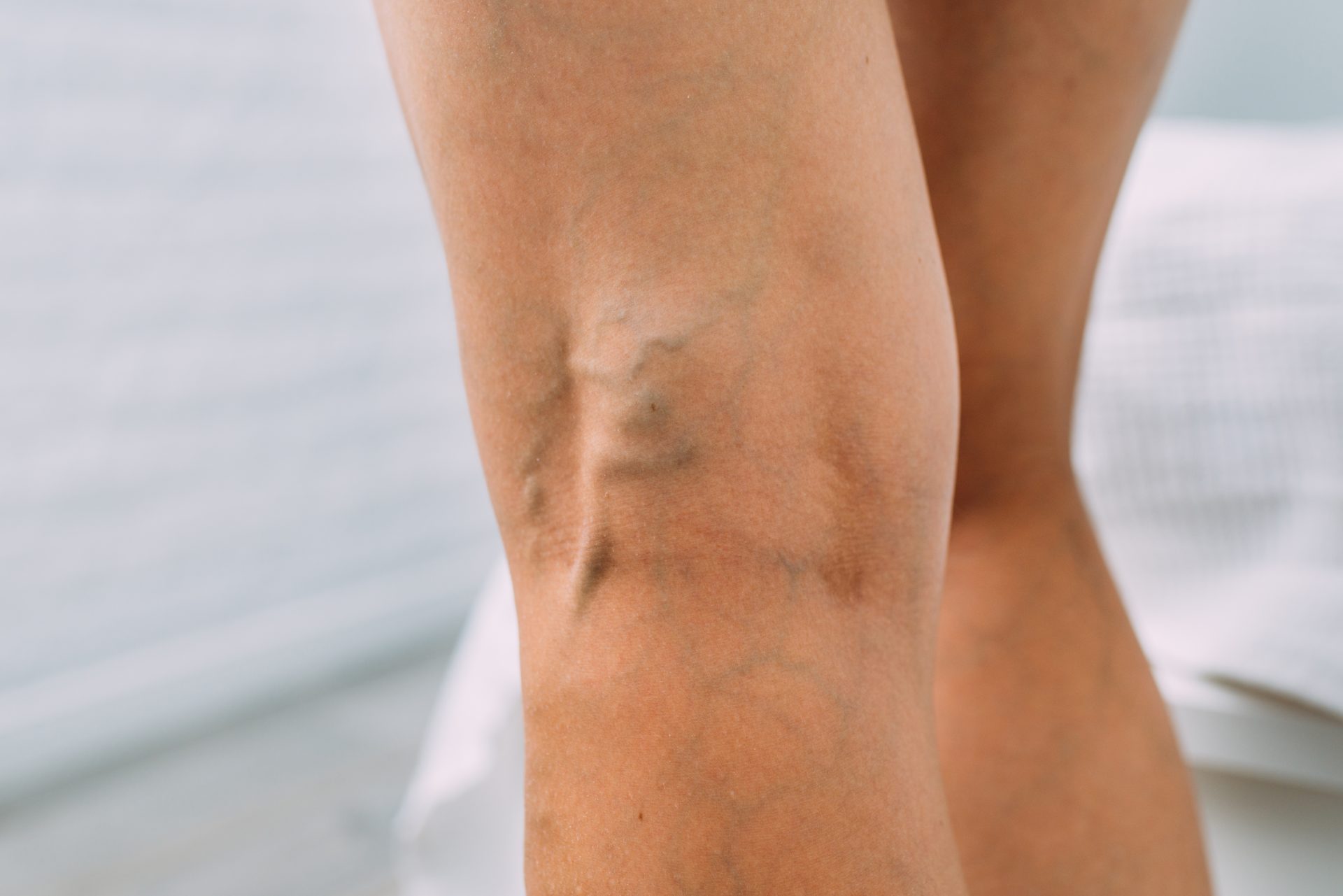
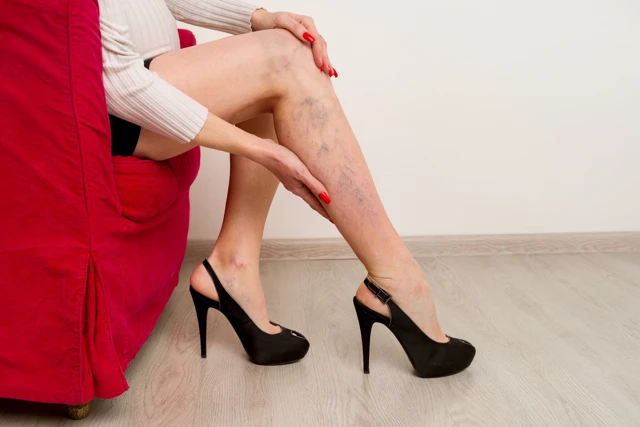
Varicose veins are large, raised, twisted veins that often bulge under the skin of the calves and thighs.
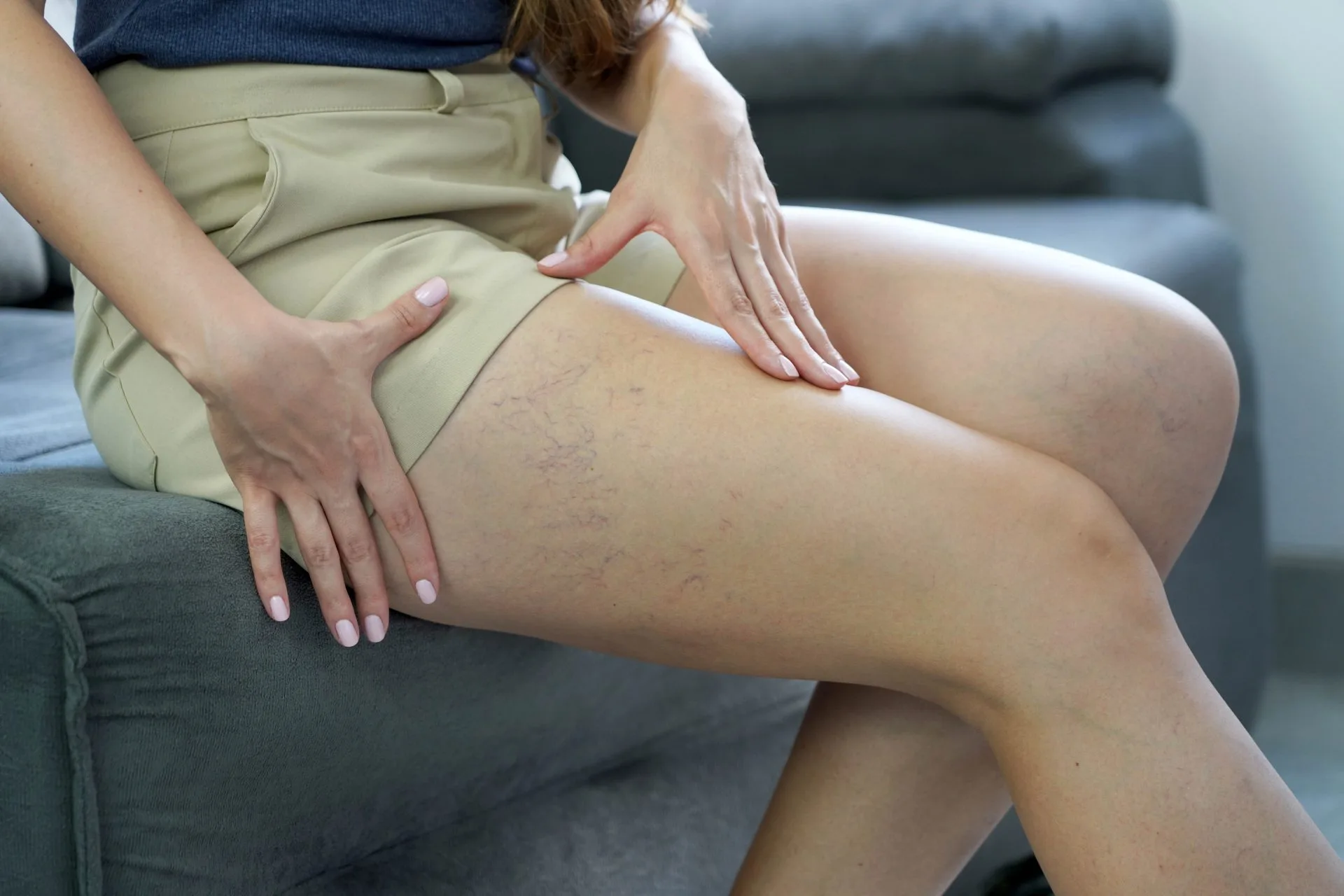
Spider veins are small red, blue, or purple lines that sit close to the skin’s surface.
Reticular veins are flat blue or green veins that fall in size between spider veins and varicose veins.
Some patients have only one type. Others have all three.
When a valve fails, pressure builds in the vein below it. Over time, that pressure stretches the vein wall, and nearby valves can begin to fail too. Family history, pregnancy, aging, extra body weight, and jobs that keep you on your feet or in a chair for hours all raise the odds. Vein disease tends to move forward slowly, which is why early symptoms are easy to dismiss.
Pooled blood adds pressure and fluid to the tissues of the lower leg. That pressure creates a dull ache, a sense of fullness, or legs that feel “like lead” by the end of the day. Many patients notice the feeling fades overnight and returns the next afternoon. That daily cycle is a strong clue that the cause is in the veins and not the muscles or joints.
Heaviness rarely shows up alone. People with vein disease often report tiredness in the legs, swelling around the ankles, itching over the veins, and restless legs at night. Some see visible veins. Others feel symptoms long before anything appears on the skin.
A throbbing or burning ache along a vein, or deep in the calf, can signal pressure from poor circulation. Pain that improves when you raise your legs points toward the veins.
Legs that tire quickly, even after a short walk or a normal workday, may be struggling to move blood upward. This fatigue often builds as the day goes on.
Fluid that leaks from overloaded veins can collect around the ankles. Sock lines that leave deep marks, or shoes that feel tight by evening, are common signs.
Long-term pressure can turn the skin near the ankles brown, red, or purple. The skin may also become dry, itchy, thick, or shiny. These changes suggest the condition has been present for some time.
An urge to move the legs at night, or painful calf cramps that wake you up, can be linked to vein problems. Many patients do not connect these symptoms to their veins until they are evaluated.
Thin skin over a swollen vein can bleed with a minor bump. Open sores that heal slowly, most often near the inner ankle, are known as venous leg ulcers and need medical care.
If veins grow larger or new ones appear quickly, the pressure inside your veins may be rising. This change deserves a closer look.
Many people think of varicose veins as a looks issue. In truth, they are often a visible sign of failing valves underneath. When bulging veins come with heaviness, aching, or swelling, the cause is usually medical and not only cosmetic.
Have your veins evaluated if leg symptoms affect your sleep, work, or daily activity, or if you notice skin changes, bleeding, or sores. Seek urgent care right away if one leg suddenly becomes swollen, warm, red, and painful, or if you have chest pain or trouble breathing. Those signs can point to a blood clot. Without care, swelling can become constant, skin can harden and darken, and wounds can form that are slow to heal.
When leg veins can no longer return blood to the heart well, the condition is called chronic venous insufficiency. Warning signs include daily swelling, skin color changes near the ankles, itching, and heaviness that keeps getting worse. Our Vein Centre treats venous insufficiency as one of its core conditions. Weak, stretched veins near the skin can also burst and bleed. Deep vein thrombosis is a clot in a deep vein. It is a separate condition, but people with poor circulation in the legs should know its warning signs and act quickly if they appear.
Treating the faulty veins addresses the root cause of the heaviness, aching, swelling, and restlessness. Our vein procedures are used for unsightly veins as well as leg heaviness, tiredness, aching, restless leg syndrome, and swelling. Many patients find that their legs feel lighter once blood is moving well again.
Our vein care treatments are minimally invasive, performed in the office, and require no downtime. They work by closing abnormal veins so blood reroutes to healthier, deeper veins. Depending on your diagnosis, options at our Vein Centre may include:
Sclerotherapy, including ultrasound-guided sclerotherapy, for spider veins, reticular veins, and some varicose veins
Laser ablation for larger veins with failing valves
Varithena foam treatment for certain varicose veins
Microphlebectomy to remove bulging surface veins
Compression stockings and Unna boot wraps to support circulation and wound healing
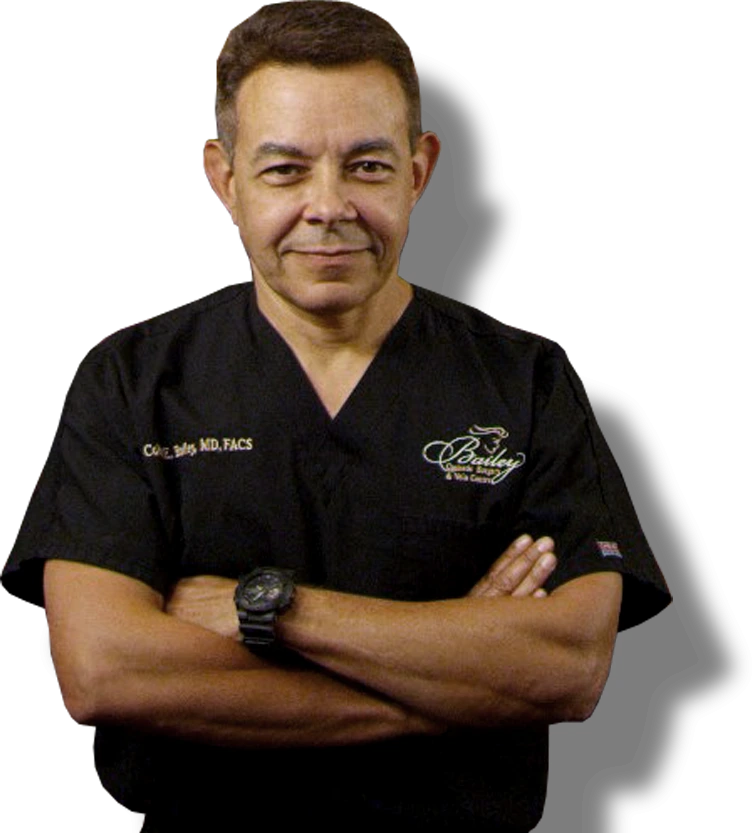
Colin E. Bailey, MD, a Fellow of the American College of Surgeons, reviews each patient’s ultrasound findings and symptoms to tailor a plan to the veins involved.
Start by tracking your symptoms for a week or two. Note when your legs feel heaviest, whether swelling appears by evening, and whether raising your legs helps. Look for visible veins, skin changes, or sores. Bring these notes to a vein screening. A diagnostic ultrasound lets our team see how blood is flowing and where valves may be failing.
Vein disease is easier to manage before skin damage or ulcers develop. Early evaluation gives you more options and can keep mild symptoms from becoming daily limits. If you have been wondering, “Are Aching, Heavy Legs a Sign of Vein Disease?”, a screening at our Springfield, Osage Beach, Sedalia, or Rolla office can give you a clear answer.
So, are aching, heavy legs a sign of vein disease? Often they are, especially when paired with swelling, visible veins, skin changes, or restless legs at night. These symptoms are signals worth taking seriously.
Vein disease tends to progress, but it can be treated with minimally invasive, in-office care that requires no downtime. Learn more about our vein treatment options and let Colin E. Bailey, MD help your legs feel lighter again.