
Leg Ulcers
Treatment
in Springfield, MO
Leg Ulcers Treatment
in Springfield, MO
Our center in Springfield provides advanced treatment for various types of leg ulcers. This may range from standard wound care to minimally invasive procedures, such as sclerotherapy and endovenous radiofrequency ablation. Dr. Colin E. Bailey creates comprehensive treatment plans to address the root causes of leg ulcers and prevent recurrence. As a board-certified specialist with decades
of experience, he achieves excellent results, helping patients alleviate discomfort and restore normal leg function as quickly as possible.
What Are Leg Ulcers?
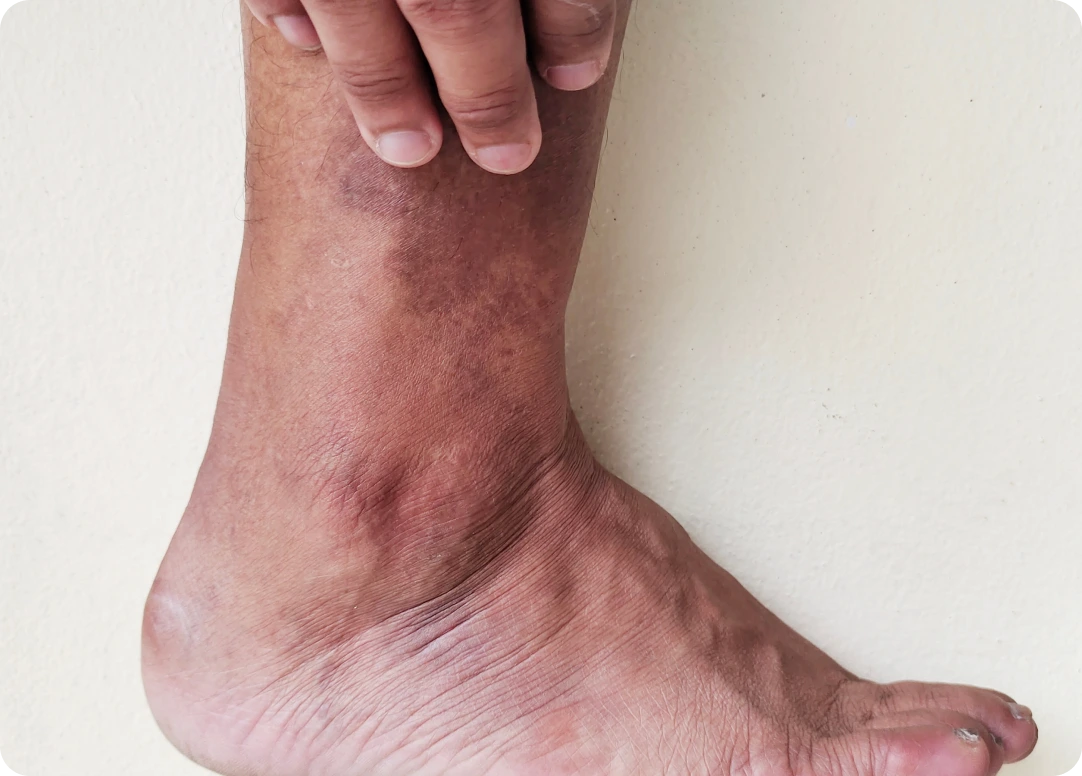
Leg ulcers are open sores that develop on the skin of the legs, usually around the ankles or lower calves. They occur when the veins function incorrectly, leading to swelling and poor blood flow. The skin breaks down, forming painful sores that are difficult to heal. If left untreated, these chronic wounds can last several weeks or many years. They are more common in older adults and people with certain medical conditions that affect leg circulation.
Types of Leg Ulcers
Venous Leg Ulcers
Venous ulcers are open wounds that develop on the lower legs due to problems with the veins and blood circulation. They typically occur near the ankles and can cause constant pain. The skin around the wounds may appear discolored or swollen.
Arterial Leg Ulcers
Arterial ulcers develop on the lower legs when the arteries become blocked or narrowed. They restrict blood flow to the area, depriving the skin of oxygen and nutrients, leading to tissue breakdown. Arterial leg ulcers are typically quite painful.
Diabetic Leg Ulcers
Diabetic leg ulcers are open wounds that can develop on the lower legs and feet of people with diabetes. Over time, high blood sugar levels damage vessels and nerves, reducing circulation and sensation. This makes the skin prone to injury and slow to heal when sores develop.
Vasculitic Leg Ulcers
Vasculitic leg ulcers are open sores associated with vasculitis – an inflammation of the small blood vessels. The affected vessels constrict and reduce blood flow, depriving tissues of oxygen and forming ulcers. These can be extremely painful and slow to heal.
Traumatic Leg Ulcers
Traumatic leg ulcers are wounds caused by physical injury to the lower legs, either penetrating or blunt force. This damage disrupts blood vessels, skin integrity, and underlying tissues. It may allow sores to form, which enlarge if infection develops or dead cells accumulate. Treatment depends on the severity of the wound.
Preparation for Leg Ulcers Treatment
Before healing leg ulcers, a thorough consultation and examination should be conducted to determine the underlying cause and create a treatment plan. Dr. Bailey gathers the patient’s medical history, including information on past injuries, vascular conditions, and relevant lifestyle factors. The ulcer is visually examined, and measurements of its size, depth, and drainage are taken. Tests like Doppler ultrasonography or imaging scans may also be ordered
to assess blood circulation and flow in the affected limb.
Preparation steps include:
- Classifying the wound type based on its cause
- Assessing for infection
- Analyzing vascular system
- Ensuring adequate circulation and perfusion
- Controlling edema (fluid buildup)
- Testing sensation
- Evaluating nutrition and immunity
- Receiving clearance from the patient's primary care physician
Leg Ulcers Treatment Options
Compression Therapy
Compression therapy involves applying compression stockings or bandages to the affected leg. This helps improve blood flow and reduces swelling. Compression therapy is commonly used along with other treatments to heal leg ulcers more quickly.
Wound Care
This involves cleaning, removing dead tissue, and dressing the ulcerated site. Proper wound management creates an optimal healing environment. It is usually combined with other treatments to achieve complete recovery and restore the full range of motion. Our wound care specialists change dressings and perform all necessary procedures to manage drainage and prevent infection.
Medication
Medication may include antibiotics, anti-inflammatory drugs, and supplements to support healing. Dr. Bailey can prescribe oral or topical pharmaceuticals depending on the patient’s needs.
Hyperbaric Oxygen Therapy
This therapy uses a special chamber to deliver high concentrations of oxygen to the tissues, stimulating the growth of new blood vessels and promoting recovery. Patients breathe pure oxygen for up to two hours per session. It helps improve many health conditions, including arterial and venous ulcers.
Microphlebectomy
Microphlebectomy is a minimally invasive surgery that removes varicose veins through small incisions. This procedure relieves pressure in the veins that could lead to leg ulcers over time if left untreated. Our vascular surgeon, Dr. Bailey, uses local anesthesia to maximize comfort and achieve the best results with microphlebectomy.
Sclerotherapy
Sclerotherapy involves injecting an FDA-approved solution (Sotradecol® or Polidocanol®) into faulty veins to damage their inner lining so they collapse and no longer swell with blood. It redirects circulation to healthier veins.
Endovenous Laser Therapy
Endovenous laser therapy uses heat from a laser to seal off damaged veins. A micro-device is threaded through the vein with ultrasound guidance until it is closed.
Endovenous Radiofrequency Ablation
Endovenous radiofrequency ablation applies high temperatures through radiofrequency waves to collapse and seal diseased veins. This procedure redirects blood flow to healthy veins, which helps relieve pain, swelling, and other symptoms.
Recovery After Leg Ulcers Treatment
The recovery time and process vary depending on the procedure and underlying cause. However, with proper treatment and care, many conditions heal within a few weeks or months. Here are some tips for the recuperation period:
- It is also essential to keep the ulcerated area clean and moist. Gentle sanitizing and wound dressings may help prevent infection and create a damp environment that encourages regeneration.
- Elevating the legs can also promote recovery by improving circulation and drainage. Patients may be advised to raise their legs periodically throughout the day. Light exercise is often also encouraged to stimulate blood flow.
- Compression therapy is often a critical part of leg ulcer treatment and recovery. Bandages, stockings, or other devices help promote venous return, reduce swelling, and improve blood flow to the affected area. Maintaining good compression is critical during the healing process.
- Good nutrition supports wound recovery. Adequate protein, vitamins, minerals, and fluids are essential. In some cases, nutritional supplements are also recommended.
Even with optimal treatment and aftercare, larger or more severe leg ulcers may require several months to close fully. Follow-up medical care is crucial to monitor progress and watch for any complications during the healing process. Catching setbacks early helps ensure the best outcome.

Candidates for Leg Ulcers Treatment
Leg ulcers affect millions of Americans, requiring timely care
to address all symptoms. Many people may benefit from our therapies for these conditions:
- Patients with venous leg ulcers
- Individuals with arterial leg sores
- People with diabetic/neuropathic leg ulcers
- Patients with leg wounds related to autoimmune conditions, such as vasculitis or pyoderma gangrenosum
- Individuals with leg ulcers resulting from trauma
- People with chronic non-healing leg sores of unclear origin
- Patients with recurrent leg ulcers after healing
Benefits of Leg Ulcers Treatment
Leg ulcers can significantly impact a person’s quality of life. Therefore, seeking proper treatment is essential to address discomforting symptoms and help the body recover. Dr. Bailey’s comprehensive therapy provides the following benefits:
- Reduces pain and discomfort
- Promotes ulcer healing
- Prevents infection
- Restores skin integrity
- Improves mobility
- Allows patients to resume normal daily activities
- Reduces the risk of recurrence
- Improves overall health and well-being
Cost of Leg Ulcer Treatment
in Springfield, MO
The cost of leg ulcer treatment in Springfield ranges from $100 to $5,000. Factors like the size and severity of the wound, the type of procedure, and the provider influence the price. A small, uncomplicated leg ulcer may cost around $100-$300. However, more significant or problematic wounds requiring endovenous radiofrequency ablation require up to $5,000. Additional costs include prescription medications, compression stockings, dressings, and other supplies.
Dr. Bailey provides accurate price quotes during initial consultations. He must evaluate the patient’s condition before creating a treatment plan and discussing the financial aspects. Bailey Cosmetic Surgery & Vein Centre offers flexible financing via CareCredit to make the procedure more budget-friendly.
What Makes Our Treatments Different From Others?
Bailey Cosmetic Surgery & Vein Centre is a premier destination for leg ulcer treatments due to its commitment to the highest quality standards. Under the direction of Dr. Colin E. Bailey, our team combines deep medical expertise with a patient-centered approach that prioritizes personal attention, privacy, and comfort. With extensive training and board certifications, Dr. Bailey provides expert care and achieves impressive results that help patients relieve their symptoms and restore comfort for many years.
Schedule Your
Consultation Today
Consultation Today

What Our Patients Say

Botox & Fillers
I’ve came to Dr. Bailey for years now and have always had the highest quality experience!!! He always goes above and beyond to make sure the procedure for Botox and Filler are pain free. In my 20’s I struggled with extremely bad migraines, at least 3 per month. Once I started Botox with Dr.Bailey they were completely alleviated and of course the cosmetic results were top notch as well. The entire office staff has always made me feel very comfortable and at ease. I truly feel like they care about me and I’m not “just another patient”. I am always 💯 pleased with my results. Dr. Collin Bailey is the BEST!! His unmatchable expertise keeps me coming back!!!!
Lisa V.
Amazing Results
I had an absolutely great experience from start to finish. Dr. Bailey saw me twice before finally going through with the procedure. The office staff is very friendly, helpful and professional. Making an appointment was very easy. The doctor was very honest with what needed to be done. I am very pleased with the results and will definitely return for my second procedure!
Julianna Smyth
Vein Repair
Dr Bailey and his staff are wonderful, professional and friendly. This is the second time in 10 years that I have needed to have vein repair. Each time the procedure has been successful, painless with instantaneous results!!
My legs no longer hurt!! The varicose veins have disappeared thanks to Dr. Bailey.
Definitely worth having the procedure done.
I would recommend Dr. Bailey to anyone wanting to ‘fix’ their legs!!
Thank you so much!!
Peggy P.
Breast Revision Surgery
My implants were rupture really bad. I went to dr. Bailey to remove those implants. He really thorough and patient and Hope the nurse help a lot. Reminded me a lot before surgery. Make sure I did well about preparation. And after surgery…I had to stay overnight, dr. Bailey gave the room they call suite. It was really nice room. And Tiffany the one stay overnight in the office really nice and helpful. She’s sweet too. Thank you dr. Bailey, I feel much better now.
Yvonne B.
Attentive and Caring Staff
“Dr. Bailey and his staff are wonderful. They are professional, attentive, and caring. They went above and beyond to ensure that I felt safe and comfortable during a stressful procedure. Cost of services are absolutely fair as well. I would HIGHLY recommend their services for anyone. I’ve already taken three of my best friends in for consults.”
Ginger Gentile
Breast Lift & Implants
“I was intimidated when I first came in but I was greeted at the door and Dr. Bailey’s staff was so nice and made me feel so welcomed. When I was having my consultation I felt insecure about myself but Dr. Bailey and his staff made me feel at ease. They were willing to tell me all my options and explain the procedure thoroughly. I am so happy I moved forward with a breast lift and my implants are a perfect size as well. I am feeling and looking better than ever! I have more confidence and overall feel better about myself. I couldn’t recommend this facility more! I keep telling my friends to come in for consultation so they can have a great experience like I did.”
Olivia S.