
Liposuction removes fat surgically and delivers larger, more defined results in a single procedure. Non-surgical fat reduction uses cold, heat or sound energy to shrink small pockets of fat over several sessions with little to no downtime. The right choice depends on how much fat you want to remove, how quickly you want results and how much recovery time you can plan for. This guide covers the main differences so you can choose with confidence.
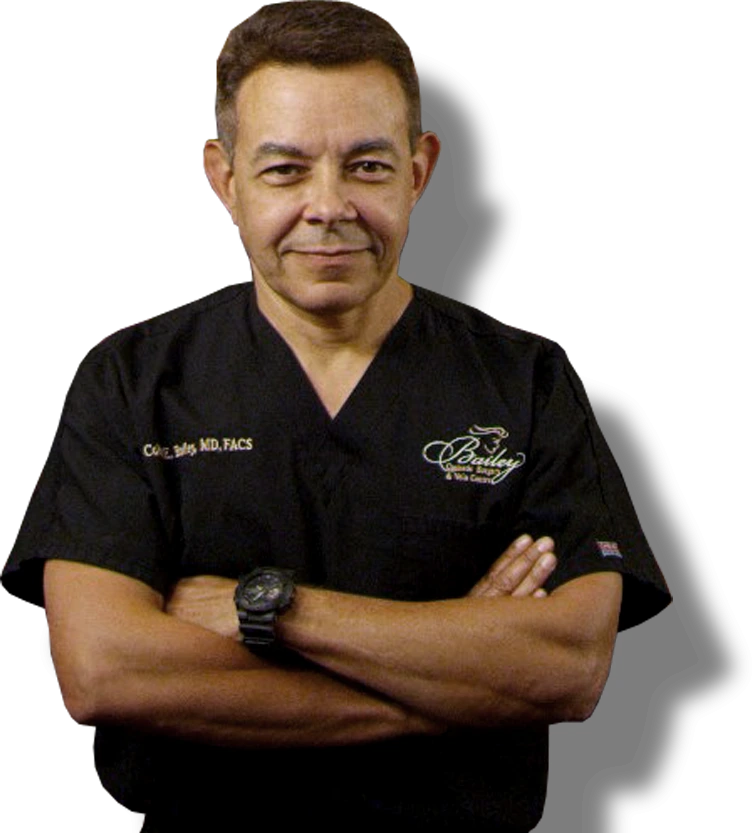
At Bailey Cosmetic Surgery & Vein Centre, our body contouring work is led by Colin E. Bailey, MD, a cosmetic surgeon and Fellow of the American College of Surgeons. Dr. Bailey has received recognition for Excellence in Body Contouring by SRC. We see patients at our offices in Springfield, Osage Beach, Sedalia and Rolla.
Both approaches target stubborn fat that does not respond to diet and exercise. Neither one is a weight loss treatment. Both work for people who are already near their goal weight and want to refine specific areas.

Liposuction is a surgical procedure that physically removes fat cells from targeted areas. It allows precise body sculpting and can reshape areas such as the abdomen, flanks, back, arms, chin and neck. We offer several techniques, including traditional liposuction, laser liposculpture and liposculpture.
Non-surgical fat reduction uses energy applied from outside the body to damage fat cells without incisions. The body then clears those cells naturally over the following weeks. These treatments are often called non-surgical body contouring. They suit people who want modest changes and prefer to avoid surgery and anesthesia.
Several non-surgical methods are widely used in aesthetic medicine. Each relies on a different type of energy.
CoolSculpting: This brand-name treatment uses controlled cooling, a process called cryolipolysis, to freeze fat cells. The cold triggers the fat cells to break down while the surrounding skin stays protected.
Radiofrequency (RF) Lipolysis: This method heats fat cells to a temperature that damages them. Many RF devices also warm the skin, which can support mild tightening.
External Ultrasound: Focused sound waves are directed at the fat layer beneath the skin. The energy disrupts fat cells while leaving the skin surface intact.
The biggest difference between the two approaches is how fat leaves the body. Liposuction removes it right away. Non-surgical treatments damage fat cells and rely on the body to clear them over time.
During liposuction, fat cells are suctioned out through small incisions. Because the fat is removed directly, the surgeon controls how much is taken and where. This control lets Dr. Bailey shape contours, smooth transitions between areas and create definition that is hard to achieve any other way.
Laser techniques add energy to the process. That energy helps loosen fat so it can be removed more smoothly. These methods support detailed sculpting in areas such as the stomach, back and arm lipo. Liposuction can also treat smaller zones such as the knees, the upper back fat pad known as a buffalo hump and the area under the chin.
Non-surgical devices deliver cold, heat or sound energy through the skin to the fat layer below. The damaged fat cells break down, and the lymphatic system gradually carries them away. This process takes time, so changes appear slowly over several weeks to a few months.
Each session treats a limited area. Many patients need more than one session per area to see the change they want. Results are gradual, which some patients prefer because the change looks subtle to others.
Understanding Non-Surgical Fat Reduction vs. Liposuction: Key Differences in results helps set realistic expectations. Liposuction removes more fat with more precision. Non-surgical options produce smaller, gradual changes.
Liposuction can remove a larger volume of fat in one procedure. It also allows the surgeon to treat several areas at once and blend them into a balanced shape. Patients often notice a difference soon after surgery, though swelling hides the final result at first. As swelling fades over the following months, the new contour becomes clear.
Liposuction removes fat, but it does not remove loose skin. Patients with significant skin laxity may get a better outcome by pairing liposuction with a skin removal procedure such as a tummy tuck. A Mommy Makeover, for example, usually combines a tummy tuck, breast work and liposuction.
Non-surgical treatments produce a modest reduction in fat in the treated area. They work well for small, pinchable bulges rather than larger areas. Results typically appear over one to three months as the body clears the damaged cells.
These treatments cannot match the volume or precision of liposuction. They also do little for loose skin. For patients who want only a slight refinement and no downtime, that tradeoff can be worthwhile.
With both approaches, the treated fat cells are gone for good. The body does not regrow those specific cells. However, the fat cells that remain can still expand if you gain weight. Significant weight gain after either treatment can change your results.
The way to protect your results is the same for both options. Keep a stable weight with consistent eating habits and regular activity. For patients who want support with weight management, our medical weight loss program can help before or after body contouring.
Recovery is often the deciding factor for patients. The two approaches differ sharply here.
Liposuction is surgery, so it involves a recovery period. Patients can expect swelling, bruising and soreness in the treated areas for a period of time after the procedure. A compression garment is usually worn to support the tissue and help control swelling.
Many patients return to light daily activity within several days and to desk work within about one to two weeks. Strenuous exercise is usually paused for a few weeks longer. The techniques we use are designed to offer a quicker recovery than traditional methods. Your personal timeline depends on the number of areas treated and how much fat is removed. Dr. Bailey will give you specific aftercare instructions for your situation.
Non-surgical treatments require little to no downtime. Most patients return to work and normal activities the same day. During treatment, patients may feel cold, warmth, tingling or pressure depending on the device.
Afterward, the area may feel tender, numb or slightly swollen for a short time. These effects typically fade on their own. Because there is no surgery, there are no incisions to care for and no compression garment to wear. The safest path starts with an honest conversation about your health history and goals. Candidacy for any procedure at our office is determined through an in-person assessment that considers your personal anatomy and desired results. During that visit, Dr. Bailey reviews the considerations that apply to you specifically.
Several factors support a safe experience. Choosing a qualified surgeon with body contouring experience is one. Being honest about your medical history and medications is another. Following your aftercare plan closely also supports smooth healing. Dr. Bailey is a Fellow of the American College of Surgeons, and he brings that surgical training to every liposuction case. Most side effects are mild and short-lived, such as temporary redness, numbness or tenderness.
Even so, these treatments are not right for everyone. Results depend on choosing a patient whose fat pocket is suited to the device being used. An evaluation helps confirm whether a non-surgical option can realistically meet your goals or whether you would be better served by surgery.
Cost is shaped by the type of treatment, the number of areas and the number of sessions. The two approaches are structured very differently.
Liposuction is typically priced as a single procedure. The total depends on the technique used, the number of areas treated and the complexity of the sculpting. Combining liposuction with another procedure, such as a tummy tuck, will also affect the total. Because one procedure can treat several areas and remove more fat, some patients find it delivers more change for their investment. Your personalized quote is provided after your consultation.
Non-surgical treatments are usually priced per session or per treatment area. A single session typically costs less than surgery. However, many patients need multiple sessions per area. Treating several areas adds up over time. When comparing options, consider the total number of sessions you may need rather than the price of one visit.
Several practical questions can guide your decision.
Amount of fat: Small, pinchable bulges may respond to non-surgical treatment. Larger areas or multiple zones usually call for liposuction.
Desired precision: If you want defined, sculpted contours, liposuction offers more control.
Skin quality: Neither option removes loose skin. If laxity is a concern, a combined surgical plan may be needed. For the neck area, our medspa also offers RF microneedling for non-surgical tightening.
Downtime: If you cannot take time away from work or family, a non-surgical option may fit your schedule better.
Comfort with surgery: Some patients prefer to avoid incisions and anesthesia entirely. Others are comfortable with surgery in exchange for a larger result.
Timeline: Liposuction results become clear as swelling fades. Non-surgical results develop gradually over a few months and may need several sessions.
Weight stability: Both options work when your weight is stable. If you plan to lose a significant amount of weight, it often makes sense to do that first.
Liposuction is often the stronger choice for patients who want noticeable, sculpted results and can plan for a short recovery. It suits patients with moderate fat deposits, multiple problem areas or goals that require precise shaping. Laser liposculpture add options for detailed contouring.
Non-surgical fat reduction may suit patients who want a subtle change in a small area and prefer no downtime. It can also appeal to patients who are not ready for surgery but want some improvement.
The clearest way to decide is an in-person evaluation. During your consultation, Dr. Bailey examines the areas that concern you, assesses your skin quality and discusses your goals. You leave with a clear plan that explains which approach fits your body, what results to expect and what recovery will look like. When patients understand Non-Surgical Fat Reduction vs. Liposuction: Key Differences in this personal context, the decision becomes much simpler.
Liposuction removes more fat in one procedure and allows precise sculpting, with a recovery period of days to weeks. Non-surgical fat reduction offers modest, gradual changes with little to no downtime but often requires multiple sessions. Treated fat cells are gone permanently with either option, and a stable weight protects your results. An in-person assessment with Dr. Bailey at any of our four offices will help you choose the approach that matches your goals.