
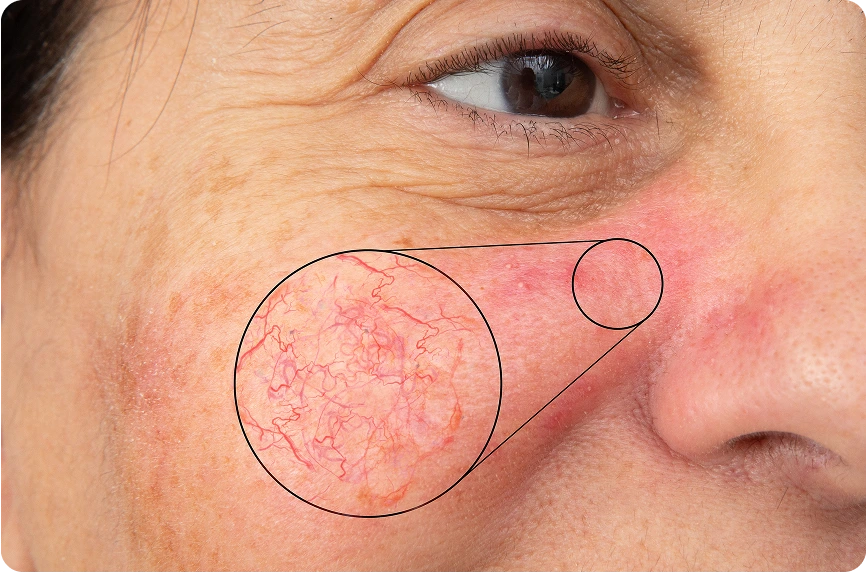
Those thin red, purple, or blue lines that show up on your cheeks, nose, or chin can feel stubborn and nearly impossible to hide,l especially when they seem to appear out of nowhere. If you’re wondering how to get rid of facial veins, you’ll be relieved to know that today’s treatments are highly effective, minimally invasive, and typically require little to no downtime. Laser therapy is the gold-standard approach for most people, with intense pulsed light (IPL) and sclerotherapy being proven options. A qualified vein specialist or board-certified dermatologist can help you determine which path is right for your skin type and the specific look of your veins.
What Are Facial Spider Veins?
Facial spider veins – also called telangiectasias – are tiny, damaged blood vessels sitting just beneath the surface of the skin. They get their name from the web-like or branching pattern they often form, and you’ll most commonly find them on the nose, cheeks, and chin. Their color can range from light pink to deep purple, depending on how close they sit to the surface.
Unlike varicose veins on the legs, facial veins don’t cause physical discomfort. They’re a cosmetic concern – but that doesn’t make them any less worth addressing. Many people find that visible facial veins affect how they feel about their appearance, and treating them can make a real difference.
Varicose Vein vs. Facial Veins: Understanding the Difference
A varicose vein is a swollen, twisted vein most commonly found on the legs. It develops when the valves inside a vein stop working properly, allowing blood to pool and creating those raised, rope-like bulges under the skin. Facial veins are a different story entirely – they’re far smaller, sit right beneath the surface, and form when tiny capillaries dilate, not because of faulty valves.
This distinction matters because the treatments are different. What works for a varicose vein on the leg, such as thermal ablation or surgical stripping, isn’t what a specialist will recommend for your face. Facial veins need gentler approaches, and the good news is that those options are very well developed and widely available.
Risk Factors That Contribute to Facial Veins
Facial veins don’t usually have one single cause. For most people, it’s a combination of genetics, lifestyle, and environment working together over time. Understanding your risk factors can help you have a more productive conversation with your doctor and help you protect your skin after treatment.
Hormonal Changes and Your Skin
Hormonal changes play a bigger role in vein health than many people realize. Pregnancy, menopause, and hormonal birth control can all cause blood vessels to dilate and become more visible over time. Estrogen, in particular, is known to weaken the walls of small blood vessels, which is a significant reason why women tend to develop facial veins more frequently than men.
Sun Exposure and Skin Damage
Repeated sun exposure is one of the most common and most preventable contributors to facial veins. UV rays break down the collagen that supports your skin’s small blood vessels, and when that structural support weakens, capillaries dilate and rise closer to the surface. People with fair skin are especially susceptible since they have less natural protection from UV damage.
Other common risk factors include:
- A family history of spider veins or rosacea
- Rosacea itself, which causes chronic flushing and ongoing vascular inflammation
- Excessive alcohol consumption, which repeatedly dilates blood vessels over time
- Temperature extremes – both heat and cold stress fragile capillaries
- Skin trauma, including past acne, injuries, or aggressive skincare treatments
What’s Happening with Forehead Veins?
Forehead veins deserve a closer look because they behave a little differently from spider veins on the cheeks or nose. The skin on the forehead is naturally thinner, which makes veins more visible even when they’re not significantly enlarged. They can also become more prominent with age as we gradually lose facial volume and the cushioning under the skin thins out.
In some cases, forehead veins appear during physical exertion or when you’re overheated – and then fade on their own. Those are usually nothing to worry about. But if your forehead veins are persistent and visible at rest, the same laser-based treatments used for facial spider veins are generally very effective. A specialist can quickly assess whether the veins are superficial enough for standard laser treatment or whether a different approach would get you better results.
Facial Vein Treatment: What Actually Works
The technology for treating facial veins has advanced significantly in recent years, and today’s options are safe, well-tested, and deliver genuine results. Most treatments work by targeting the damaged vessel with energy – heat or light – causing it to collapse and be naturally reabsorbed by the body over the following weeks.
Laser Therapy
Laser treatment is widely considered the gold standard for facial veins. Focused light energy heats the vein, causing it to collapse and gradually fade as the body absorbs it. There’s no cutting, no significant downtime, and results become visible within a few weeks. Most people need two to four sessions to achieve their best outcome.
Intense Pulsed Light (IPL)
IPL uses broad-spectrum light rather than a single laser wavelength, making it especially effective for diffuse redness and vein clusters linked to rosacea. It can treat a larger area of skin in a single session, which many patients find efficient and convenient.
Sclerotherapy
Sclerotherapy is most commonly associated with leg veins, but a highly diluted solution can also be used for certain larger facial veins. A fine needle is used to inject the solution directly into the vein, causing it to close and fade over time. It isn’t the first-line option for the face, but it’s a solid choice for specific vein types that don’t respond as well to light-based treatments.
Treatment Options: What to Expect at Your Appointment
Most facial vein treatments are done in-office and take between 15 and 45 minutes. Here’s a typical flow:
- A thorough consultation to review your skin, vein type, and goals
- A patch test for first-time laser or IPL patients
- The treatment itself – you may feel a mild warmth or snapping sensation on the skin
- A brief cool-down with ice or soothing gel applied after the session
- Clear aftercare instructions to support your healing and protect your results
Most patients return to their normal routine the same day. Some redness or mild puffiness in the first 24 to 48 hours is completely normal and typically resolves quickly on its own.
How to Support Your Vein Health Day to Day
Treatment does the heavy lifting, but everyday habits can protect your results and slow the development of new veins. Taking care of your vein health doesn’t require a dramatic lifestyle overhaul – just a few consistent choices:
- Wear SPF every single day. Broad-spectrum sunscreen with SPF 30 or higher is the single most powerful step you can take to prevent new facial veins from forming.
- Avoid prolonged heat exposure. Saunas, steam rooms, and very hot showers repeatedly dilate blood vessels over time.
- Be gentle with your skin. Harsh scrubbing and overly aggressive exfoliants can weaken capillaries and create new damage.
- Stay consistently hydrated. Good hydration supports skin elasticity and healthy circulation.
- Manage rosacea proactively. Treating rosacea reduces the chronic inflammation that leads to ongoing vein formation.
Finding the Right Specialist
When it comes to facial veins, who treats you matters just as much as how they treat you. Dr. Colin E. Bailey is double-board-certified in cosmetic surgery, phlebology, and general surgery – a combination that means he brings a comprehensive, medically grounded perspective to every consultation. He is highly skilled at identifying not just what’s visible on the surface, but also the underlying veins that may be contributing to the problem and could affect your long-term results.
Rather than taking a one-size-fits-all approach, Dr. Bailey takes the time to assess your skin, your vascular health, and your goals before walking you through all available treatment options so you can make an informed decision. When you’re in the right hands, the path to clearer skin feels straightforward – because it is.
The Bottom Line
Understanding what’s happening beneath the skin’s surface gives you a real advantage when it comes to treatment. Facial veins – whether they appear as visible veins across the cheeks, thread veins along the nose, or broken capillaries near the eyes – all develop through a similar process. When blood flow is disrupted or blood vessels lose their structural integrity, blood accumulates in weakened vessels and pushes them closer to the skin’s surface. Factors like thinning skin with age, direct sun exposure over the years, and repeated flushing can all accelerate this process.
Topical steroids, when used long-term without medical guidance, can also thin the skin and make small veins more pronounced. The good news is that most people see excellent results with very little disruption to their daily lives – treatments today are designed to target problem veins with minimal discomfort and no significant recovery time.
Once your initial treatment is complete, staying proactive makes a meaningful difference in how long your results last. Your provider will guide you through the healing process and let you know if additional treatments are needed to address any remaining veins or new ones that develop over time. Protecting the surrounding skin – keeping it healthy, hydrated, and shielded from UV damage – is one of the best things you can do. Consistent sun protection should be at the top of your daily routine, and other preventative measures like avoiding extreme heat and managing any underlying skin conditions will help keep new veins from forming. Clearer skin is absolutely achievable, and with the right care, it’s something you can maintain well into the future.